01
A session with a purpose.
A lesson plan shaped around your goals, learning style and recent progress.
I combine on-court coaching with video and performance analysis to help you understand your game and practise with a clear purpose.

Good coaching is the work before, during and after the session.
A lesson plan shaped around your goals, learning style and recent progress.
Observation, video and match patterns explain what to work on and why.
Updated notes, regular communication and priorities for practice keep development moving.
Tennis became the place where an analytical career and a competitive sporting background could serve a clear purpose.
I picked up a racket during Covid after time away from sport following an ACL injury. I began playing, competing and learning how much a player can improve when practice has direction.
Before tennis, I competed in football, basketball, Gaelic football and ultimate frisbee. I had also played sport at university level, and that competitive background shaped the way I approached learning a new game.
After qualifying and practising as a solicitor, and completing an MSc in Data Analytics, I began bringing the same habits of observation and problem-solving to my own tennis: recording matches, tracking patterns and building more deliberate ways to practise.
In 2024, I started my coaching pathway through coach education, disability-tennis workshops and volunteering with vision-impaired tennis. I also formalised match preparation, technical and tactical ideas into practical frameworks, and gained my Level 1 qualification late that year.
I began private coaching and joined a performance academy as an assistant coach in January. I completed my Level 2 coaching qualification and added performance analysis in September, bringing an analytics background into video review, match preparation and development reports.
I continued private coaching at Naas Lawn Tennis Club and volunteer coaching with vision-impaired tennis. Each role has reinforced the value of clear communication and a plan players can understand.
I took on lead coaching for a weekend performance group and began league doubles coaching at Clane Lawn Tennis Club. Signal Tennis connects coaching, match analysis, development planning and the player portal, so the work on court has a clear link to what happens next.
Players and families should be able to return to the key ideas: what was observed, what matters now and how progress will be reviewed. The portal gives that coaching conversation a useful home between sessions.
Individual and team progress, with the context that gives the numbers meaning.
Junior player · Building confidence
0-20 ➡ 40-33
A 0-20 career record in Aug '25 became 40 singles wins in the last year.
Ranking progress 2024-26: Unranked ➡ 20th Percentile ➡ 70th Percentile.
Junior player · Finding consistency
39% → 70% win rate
Top 50 Junior I coach privately went from 39% win rate & 0 Titles Jan-Jun '26 to 70% win rate (23 matches) and three titles since then.
Adult Male
4.5 → 7.0 UTR
UTR increased from 4.5 to 7.0 in less than a year.
80% win rate (15 matches) in the division he was winless in the year prior.
Group Squad I Led
+1.01 UTR
Performance squad players gained approximately one UTR point on average from 2025 to 2026.
Adult Doubles Pair
81st → 92nd percentile
Improved from the 81st to the 92nd percentile, winning five doubles titles.
Club
30% → 39% win rate
The teams I worked with improved their combined year-on-year win rate across 81 matches.
A simple cycle that connects what happens on court with purposeful practice between sessions.
Watch closely in practice and competition, with video where it adds clarity.
Turn observations into patterns: strengths, pressure points and tactical habits.
Choose the priority that will make the biggest difference to the player’s game.
Revisit the work, update the plan and make the next decision with better information.
Every match generates thousands of data points. Most of them are noise.
I find the few that actually matter.
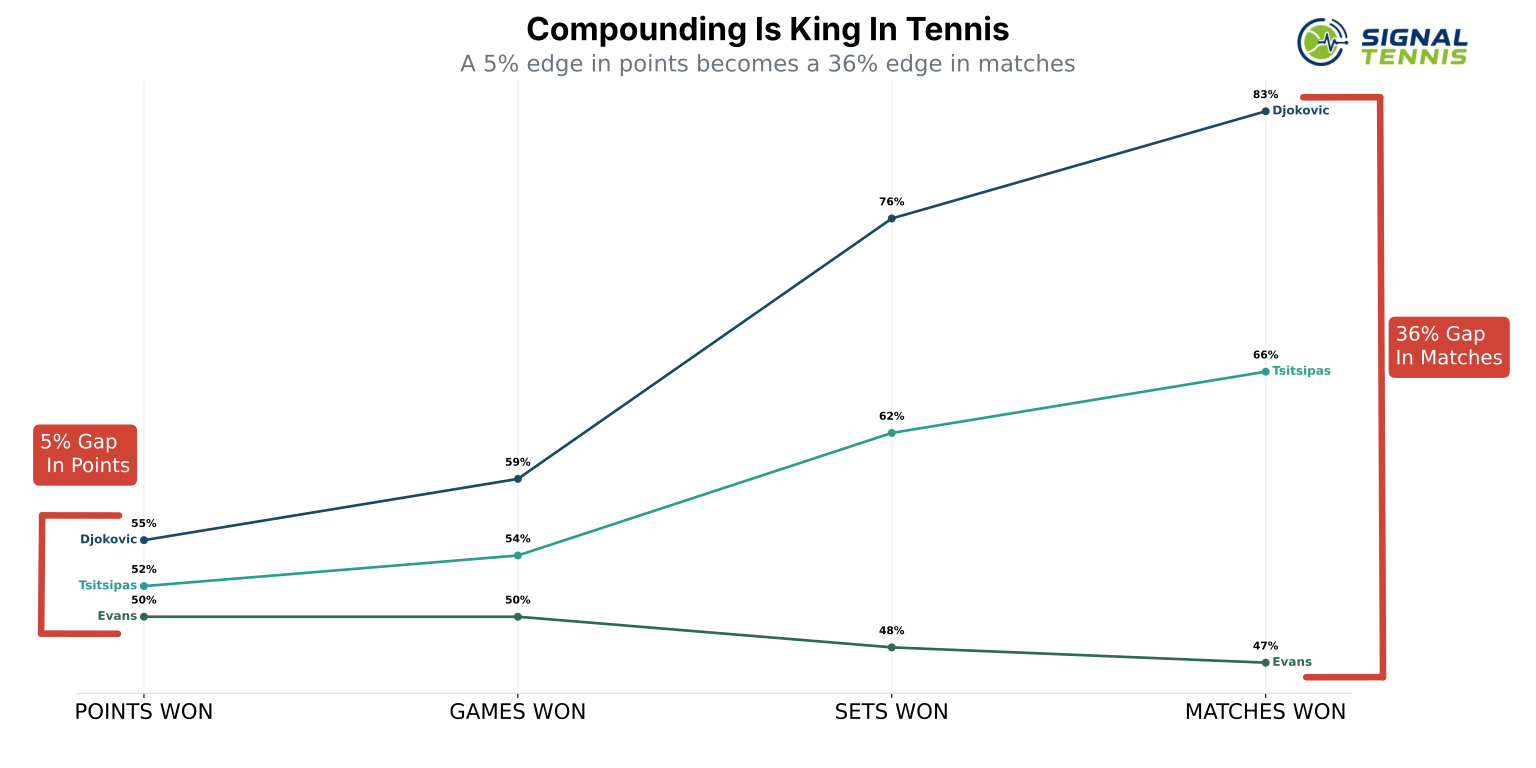
A 5% edge in points won compounds into a 36% gap in matches won.
Just 5 percentage points separate Dan Evans from Novak Djokovic in career points won. That 5% edge in points compounds into a 36% gap in matches won.
Most players win around half their points. For those players, winning 1 more point in every 100 goes with winning roughly 7 more matches in every 100.
I use match data, video review, and structured observation to identify the 2–3 patterns that explain most of your results.
I deliberately ignore what looks important but isn't. One bad match isn't a crisis. A hot streak isn't a game plan.
Constraints-led drills, process KPIs, and trend tracking over weeks: not snap judgements after one session.
Three facts that shape every point you play and every session I plan.
The serve and return are the most underpractised shots in tennis, yet they decide 30% of all points before a rally even starts.
You can't avoid errors, but you can force more of them from your opponent. That's the signal.
Opening shots (serve, return, serve+1, return+1) decide the vast majority of points you'll ever play.
Tell me where you are now and what you want to work towards.